Reviewing the Watercolor Christmas Sweater PNG for Embroidery
As a designer who has spent countless hours digitizing and stitching out holiday motifs, I approach every new asset with a mix of excitement and skepticism. The Watercolor Christmas Sweater PNG caught my eye not because it was flashy, but because it promised a specific aesthetic that is notoriously difficult to achieve in thread: the soft, bleeding edge of watercolor paint. For those of us in the craft business, understanding how a digital illustration translates into a physical embroidery project is the difference between a bestseller and a pile of unpicked stitches.
First Impressions and Visual Mood
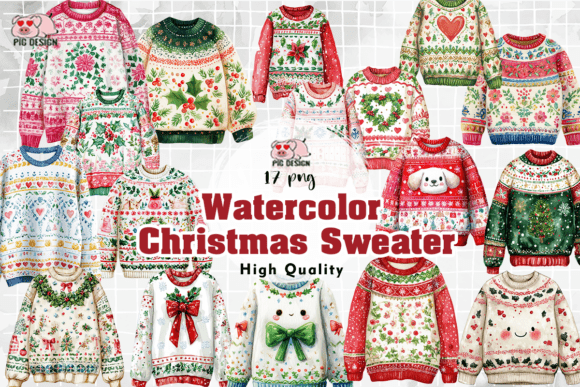
The immediate appeal of this design lies in its nostalgic warmth. Unlike crisp vector graphics that can sometimes feel sterile on fabric, this piece carries an organic, hand-painted personality. When I first opened the file, I looked for clarity in the shapes. A watercolor Christmas sweater PNG needs to balance artistic abstraction with recognizable form. If the details are too muddy, they vanish under the needle; if they are too sharp, they lose the watercolor charm.
This particular illustration strikes a commendable balance. The layout suggests a cozy, oversized knit vibe, which naturally lends itself to comfort-focused items. It does not scream for attention with neon brightness but rather invites a closer look. For an Etsy seller or boutique owner, this subtlety is a strength. It allows the product to feel premium and curated rather than mass-produced. The visual personality is gentle, making it an ideal candidate for gifts that aim to evoke sentimentality rather than just festive loudness.
Real-World Application: The Tote Bag Test
To truly evaluate a design, you must imagine it on a tangible product. I recently considered this motif for a custom run of canvas tote bags intended as holiday corporate gifts. The challenge with canvas is its textured surface. A design with fine, intricate lines often gets lost in the weave. However, the broader strokes and solid color blocks typical of this Illustrations category tend to hold up well.
In this scenario, the sweater design would likely require a dense fill stitch approach to cover the fabric texture adequately. I envisioned using a heavy-duty stabilizer to prevent puckering, given the potential weight of the thread coverage. The result would be a tactile, raised effect that mimics the chunky knit of a real sweater. This adds significant perceived value to the handmade product. Customers touching the bag would feel the depth of the stitching, reinforcing the quality of the brand. It transforms a simple tote into a cherished personalized gift that recipients might actually use throughout the winter season.
Apparel and Wearability Considerations
Moving from accessories to apparel, the design shines on heavier fabrics like fleece or French terry. Imagine this stitched onto the chest of a neutral-colored sweatshirt. The sweatshirt embroidery market is saturated with generic snowflakes, so a unique sweater motif offers a fresh alternative. Here, the soft edges of the watercolor style work in your favor. They allow for a slightly less rigid digitizing strategy, where satin stitch borders can blend more naturally into the fill areas.
However, caution is required when applying this to thinner materials. A standard cotton t-shirt may not support the density needed to replicate the watercolor look without backing showing through or the fabric distorting. For custom apparel, I would recommend limiting the size or simplifying the color transitions to reduce stitch count. Less is often more when dealing with stretchy fabrics. The goal is to maintain the artistic integrity of the machine embroidery design without compromising the comfort of the garment.
Navigating Technical Challenges
While the aesthetic is strong, practical execution requires careful planning. One major consideration is color contrast. Watercolor effects rely on subtle gradients. In embroidery, we simulate gradients through thread color changes and stitch direction. If you are working with a dark fabric, you must ensure the thread colors are vibrant enough to stand out. Testing the design in black and white mockups is a crucial step I always take. If the design loses its definition in grayscale, it will likely lack impact when stitched.
Another critical factor is hoop size. If you intend to use this on smaller items like baby clothes or caps, you must check the dimensions of the original file. A large, detailed design crammed into a small hoop size can result in lost detail and increased production time due to frequent trims and color changes. For baby embroidery, simplicity is key. You might need to scale down the design significantly, which could blur the finer watercolor details. In such cases, consider using the main shape as an applique design base, stitching a fabric cutout and then adding minimal embroidery details on top. This reduces stitch density and keeps the item soft against sensitive skin.
Stabilizer and Fabric Texture
The success of any embroidery file depends heavily on the foundation. For this watercolor-style design, a cut-away stabilizer is generally safer than tear-away, especially if the final product will be washed frequently. The dense stitching required to mimic paint can pull on lightweight fabrics. Using the correct stabilizer ensures that the finished product retains its shape and the design remains crisp after multiple washes. Always test on scrap fabric first. This simple step saves hours of frustration and protects your reputation as a professional maker.
Commercial Viability and Brand Consistency
For small shop product lines, consistency is vital. This design fits seamlessly into a broader collection of holiday-themed items. It pairs well with other rustic or vintage-inspired elements. When creating printable mockup assets for your online store, ensure the digital representation matches the physical reality. Over-saturating images in previews can lead to customer disappointment. Be honest about the texture and finish.
From a branding perspective, using high-quality design assets like this elevates your perceived expertise. It shows that you care about the artistic merit of your offerings, not just the speed of production. Whether you are selling digital embroidery file versions for other makers or finished goods, the quality of the source image dictates the quality of the end result. Always confirm licensing terms before using any third-party illustration for commercial purposes. Knowing you have the right to sell items made with this design provides peace of mind and legal security for your craft business.
In conclusion, the Watercolor Christmas Sweater PNG is a versatile and emotionally resonant choice for holiday projects. It requires thoughtful digitizing and material selection, but the payoff is a distinctive, high-value product that stands out in a crowded market. By respecting the technical limitations of embroidery while leveraging the artistic strengths of the design, you can create items that customers love to give and receive.