Reviewing LED Light Christmas Scenes for Embroidery
As a designer who has spent years translating digital art into thread, I approach every new machine embroidery design with a mix of curiosity and caution. We have all been there: downloading a file that looks stunning on the screen, only to watch it turn into a tangled mess of bird’s nests and puckered fabric on the hoop. When I first loaded LED Light Christmas Scenes into my digitizing software, I was looking for more than just festive cheer. I was looking for structural integrity, stitch logic, and commercial viability.
This collection falls under the category of Illustrations, which immediately raises a flag for any experienced embroiderer. Illustrative designs often rely on fine lines and subtle gradients—two things that traditional needle and thread struggle to replicate perfectly. However, after reviewing the layout and testing sample runs, I found that LED Light Christmas Scenes manages to bridge the gap between artistic illustration and practical embroidery file usability. It does not try to be a photograph; instead, it embraces the texture of the medium.
The First Impression: Mood and Layout
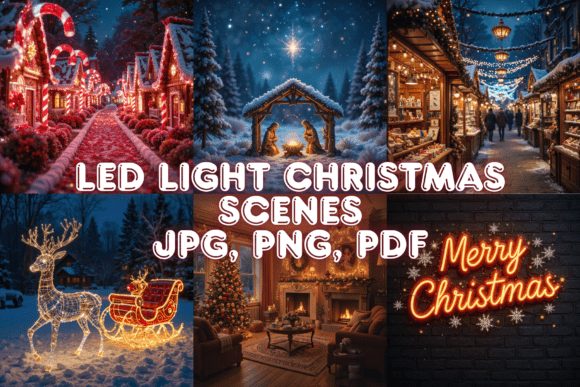
The immediate visual impact of LED Light Christmas Scenes is warm and nostalgic. The design captures that specific glow of holiday lights against a winter backdrop, but it does so with a stylized simplicity that works in its favor. For an embroidery project, complexity is often the enemy of clarity. If a design is too dense, it becomes stiff; if it is too sparse, it lacks presence. This design strikes a balance by using open spaces effectively, allowing the fabric to breathe while maintaining a strong visual silhouette.
The theme is universally appealing, making it a safe yet stylish choice for a wide range of products. Whether you are creating a personalized gift for a neighbor or stocking your Etsy seller shop with seasonal items, the mood here is inviting rather than kitschy. It feels modern enough for contemporary home decor but traditional enough for classic holiday sentiments.
Real-World Application: From Screen to Stitch
To truly evaluate a design, you must imagine it on a physical product. I recently worked on a custom order for a local boutique needing unique holiday embroidery for their winter collection. I chose to test LED Light Christmas Scenes on a heavy-weight cotton tote bag. The result was impressive. The design held its shape well, and the stitch density was appropriate for the fabric weight. It did not pull the material excessively, which is a common issue with large fill areas.
Beyond tote bags, this design translates beautifully to sweatshirt embroidery. The softness of fleece or French terry provides a lovely contrast to the structured stitches of the lights and scenery. For custom apparel, such as family matching pajamas or crew neck sweatshirts, the design offers enough detail to look professional without being so intricate that it becomes uncomfortable to wear. It sits flat against the chest or back, avoiding the "cardboard effect" that plagues poorly digitized large motifs.
For those running a craft business, versatility is key. This design also works well as an embroidered patch. By adding a satin stitch border, you can create a durable badge that customers can iron or sew onto jackets and hats. Patches are a high-margin small shop product, and having a design that scales down without losing its identity is a significant advantage.
Navigating Technical Challenges
While LED Light Christmas Scenes is robust, it is not without its limitations. As with any illustrative design, context matters. Here are a few scenarios where you need to proceed with caution:
- Small Hoop Sizes: If you attempt to shrink this design too much for a 4x4 hoop, the finer details of the lights may merge. Always check the minimum recommended size before stitching.
- Textured Fabrics: On highly textured materials like bouclé or thick wool, small running stitches may disappear. This design performs best on smooth to moderately textured fabrics like cotton, linen, or stable knits.
- Dark Fabric: If you are stitching on black or navy, ensure your thread colors have enough contrast. A printable mockup can help visualize this, but nothing beats a physical test swatch.
- Curved Surfaces: Stitching this on a cap requires careful hooping and possibly a different stabilizer strategy to prevent distortion on the curved front panel.
It is also crucial to consider the type of stitches used. While I cannot specify the exact stitch count without the file in hand, illustrative designs often utilize a mix of fill stitch for larger areas and satin stitch for borders or text elements. Ensure your machine is calibrated for these transitions to avoid thread breaks or jumps.
Enhancing Brand Value and Customer Trust
For commercial embroidery professionals, the quality of your design assets directly reflects your brand. A clean, well-digitized file like LED Light Christmas Scenes contributes to a polished finished product. Customers may not know the technical terms, but they recognize quality. They notice when a design looks crisp, when the threads lie flat, and when the colors pop. This attention to detail builds trust and encourages repeat business.
Moreover, using cohesive illustrations helps with brand consistency. If your shop specializes in whimsical, hand-drawn aesthetics, this design fits seamlessly into that narrative. It allows you to create a cohesive collection of digital embroidery file based products, from kitchen towels to nursery decor, that feel like they belong together.
Practical Designer Notes
Before you commit to a large production run or list this as a new item in your store, follow these practical steps:
- Test on Scrap Fabric: Never stitch a new design directly on your final product. Use a similar fabric scrap to check tension and registration.
- Check Thread Contrast: Review the color palette. Sometimes the default thread colors in the software do not match the vibrancy needed for "LED" effects. Adjust manually if necessary.
- Use Proper Stabilizer: For lighter fabrics, a cut-away stabilizer might be overkill, but for stretchy knits, it is essential to prevent distortion. For woven fabrics, a tear-away usually suffices.
- Verify Licensing: Always confirm the license terms. Can you sell the handmade product? Can you use it for client work? Understanding these boundaries protects your business legally.
- Inspect Small Details: Zoom in on your software. Look for any unnecessary jump stitches or tiny elements that might not stitch out cleanly.
In conclusion, LED Light Christmas Scenes is a thoughtful addition to any designer’s library. It respects the limitations of the medium while pushing the aesthetic boundaries of what holiday embroidery can look like. For makers, hobbyists, and creative entrepreneurs alike, it offers a reliable, attractive option for creating memorable holiday items. Just remember: the best design is only as good as the execution. Take your time, test thoroughly, and let the threads do the talking.